

Process Mining of Procure-to-Pay Processes in the Utility Industry | Case study #1
Effective management of the procurement process, considered as the cornerstone of success for any organization, especially in manufacturing companies. This process includes steps such as identifying needs, planning, supplier selection, contract negotiation, order management, and monitoring and evaluation.
The goal of this vital process is to procure goods and services with suitable quality, competitive prices, and on-time delivery. Achieving this goal brings multiple benefits such as cost reduction, service quality improvement, risk mitigation, and increased customer satisfaction.
Continuous and accurate monitoring of the procurement process to identify weaknesses and bottlenecks plays a key role in enhancing its performance. With reliance on this information, effective improvement paths can be designed, and effective steps can be taken to achieve excellence and agility in this vital process.
This report examines the achievements of implementing a process mining project in the procurement process of a utility company. The procurement process plays a vital role in the performance of this company and is continuously monitored and analyzed by senior management. To improve the performance of this process, the procurement process management system was launched in 2015, and in 2021, with the redesign of the process and the implementation of custom software, another step was taken towards improving its performance. In this regard, process data from 2015 to 2023 has been used for analysis and performance evaluation of the process.
In the first step of the project, the procurement process event log over an 8-year period (2015 to 2023) with 5380 purchase request files was collected, analyzed, and reviewed. This review was conducted with the presence of the process owner, CEO, and head of systems and methods unit.
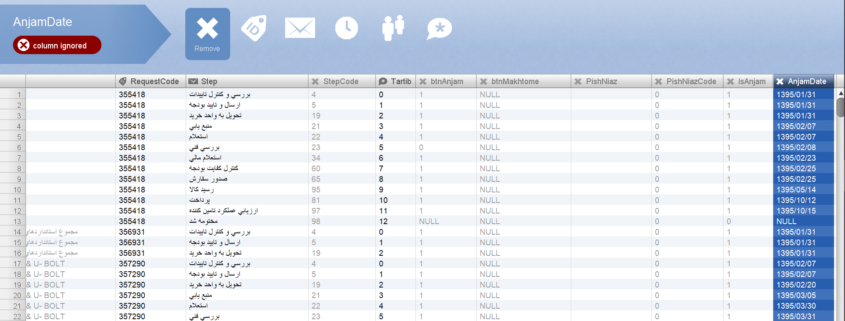
Analysis of Procurement Process Challenges
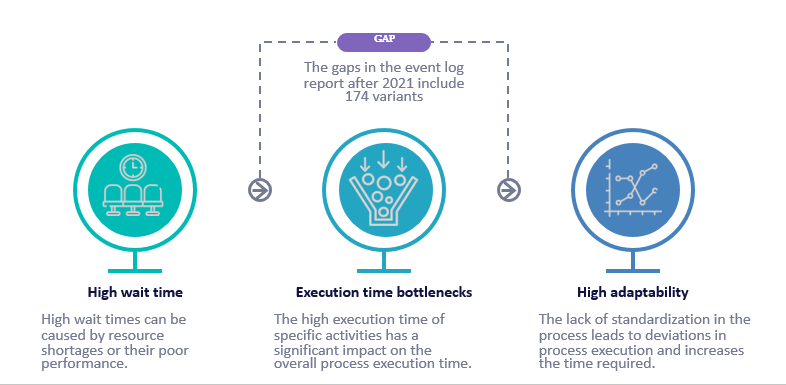
Comprehensive reviews, including stakeholder interviews, brainstorming sessions, performance analysis, data, and information analysis, revealed three key challenges in the procurement process performance:
- Lack of standardization: The lack of standard procedures leads to deviations in execution, waste of time, and inefficiency.
- Execution time bottlenecks: Long execution times in some activities severely affect the entire process.
- High wait time: Resource shortages or their poor performance result in unacceptable wait times.
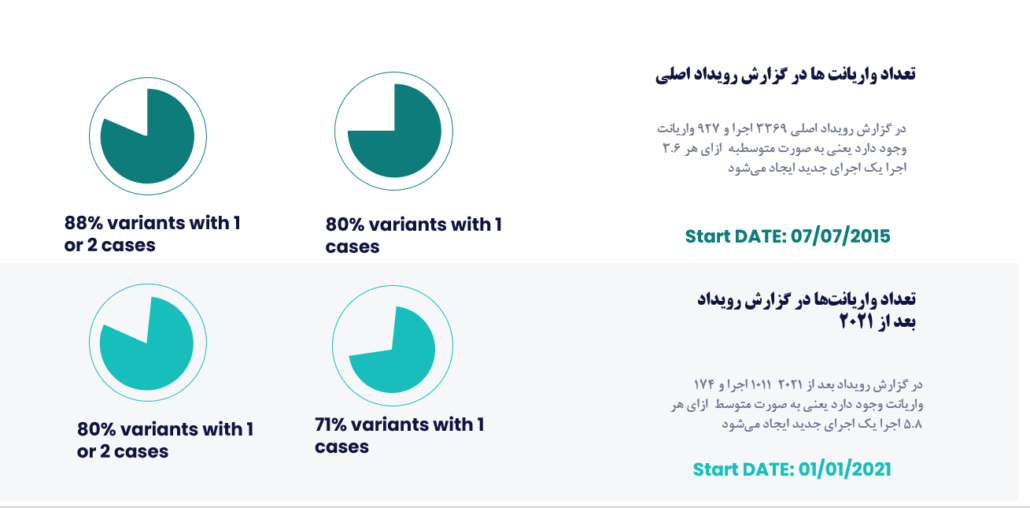
Comparative analysis of procurement process performance in two time periods of 2015 to 2020 and 2021 to 2023 (focusing on changes resulting from the implementation of the new system)
This study examines and compares the performance of the procurement process in two separate time periods. The first period from 2015 to 2020, during which the traditional procurement system was used. The second period from 2021 to 2023, during which the new procurement system was deployed. The purpose of this study is to evaluate the extent of changes and developments in the performance of the procurement process after the implementation of the new system.
This study, in addition to examining the flexibility of procurement process execution, also analyzed and investigated activities that cause delays in this process. The results show that three activities, financial inquiry, technical review, and payment, have the most significant impact on lengthening the procurement process. Therefore, focusing on optimizing these three activities can be an effective step in reducing the overall process time and improving its efficiency.
Improvement solutions are recommendations for rectifying and enhancing the performance of the procurement process. These solutions aim to increase efficiency, reduce costs, risks, and improve service quality. General solutions for improving process performance using process mining are shown in the image below.


 freepick.com


Yes! Finally someone writes about новости.
https://shorturl.fm/odukK
The variety of games available here is impressive. I spent the whole weekend exploring different tables and everything works perfectly. Highly recommended for PH players. Explore phjili98
Easy access and no hassle at all. I appreciate how straightforward the site is without all the unnecessary clutter. jili988login is a winner.